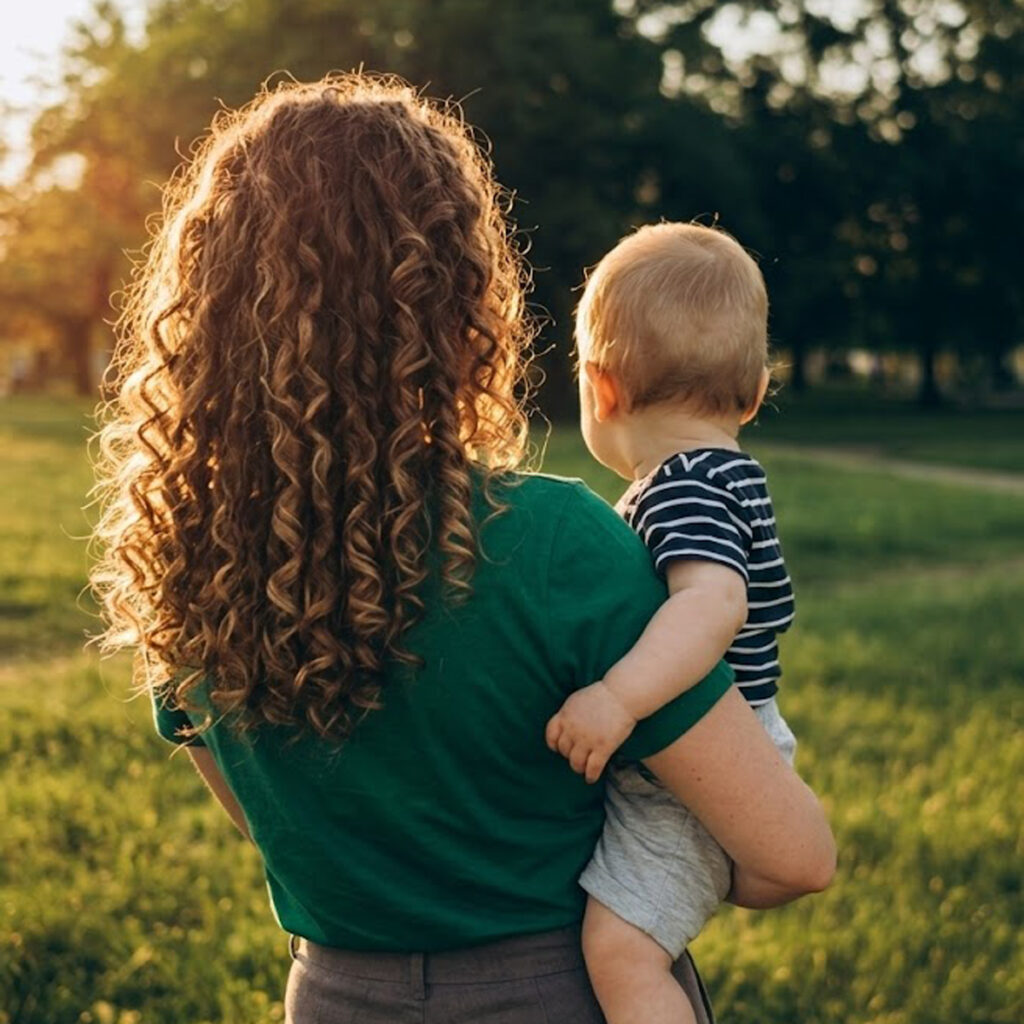
Postpartum hair loss is a temporary increase in hair shedding that usually occurs two to four months after giving birth. It happens because pregnancy hormones keep hair in the growth phase for longer than usual. After birth, hormone levels return to normal and many of those hairs shed at the same time.
For women with curly hair, this change can feel more noticeable because curls rely on density to maintain their shape and volume.
Understanding Postpartum Hair Loss
You grew a whole human. Your body gave everything it had. A few months later, you may find yourself standing in the shower watching more hair than usual swirl down the drain.
What you are experiencing is called postpartum hair loss, and it is one of the most common changes new mothers experience after pregnancy.
If you have curly hair, the change can feel even more dramatic because curls rely on density and structure to hold their shape.
This guide explains what is happening, why curly hair shows the effects more strongly, and what you can do to care for your hair while it naturally recovers.
Quick Answers About Postpartum Hair Loss
When does postpartum hair loss start? Most women notice increased shedding between 2 and 4 months after giving birth.
How long does postpartum hair loss last? Shedding usually slows around 6 months postpartum, with hair density returning between 6 and 12 months.
Will my curls return after postpartum hair loss? Yes. As new hair grows, your curl pattern gradually returns and fullness improves.
What Is Postpartum Hair Loss?
The clinical term for postpartum hair shedding is telogen effluvium. It simply means that a larger number of hairs have entered the resting and shedding phase of the hair cycle at the same time.
This is a well-recognised condition and commonly occurs after pregnancy.
Why Hair Often Feels Thicker During Pregnancy
During pregnancy, rising oestrogen levels keep more hair in the growth phase for longer. Hair that would normally shed stays in place. This is why many women notice their hair feeling thicker or fuller while pregnant.
Why Hair Sheds After Birth
After giving birth, hormone levels drop quickly. Hair that was temporarily held in the growth phase moves into the shedding phase. This does not mean the hair is damaged or permanently lost. It is simply the hair that would normally have shed gradually now shedding within a shorter period.
When Postpartum Hair Loss Usually Starts
Most new mothers begin noticing shedding two to four months after giving birth. Shedding often peaks around month three and then gradually slows.
The Hair Growth Cycle Explained
Hair naturally moves through three phases of growth.
- Anagen (Growth Phase) – Hair actively grows from the follicle. This phase can last between two and six years.
- Catagen (Transition Phase) – Hair growth slows and the follicle begins preparing for the resting phase.
- Telogen (Resting and Shedding Phase) – Hair rests before shedding naturally to make room for new growth.
Normally around 85 to 90 percent of hair is in the growth phase at any given time. During pregnancy, hormones push more hair into this stage. After birth, many of those hairs move into the shedding phase together, which is why postpartum hair loss can feel sudden.
Why Postpartum Hair Loss Can Look Different on Curly Hair
Curly hair behaves differently from straight hair, and density plays an important role in how curls form.
Curls Rely on Density
Curl patterns depend on many strands working together to create shape and volume. When density decreases, curls may appear flatter or less defined.
Where Thinning Is Most Noticeable
Many women notice thinning around the temples and hairline first. These areas often contain finer hairs and can show changes earlier than the rest of the scalp.
The Emotional Impact
For many women, curls are a big part of their identity. Seeing them change, even temporarily, can feel upsetting. These feelings are completely normal during postpartum recovery.
Common Signs of Postpartum Hair Shedding
You may be experiencing postpartum hair loss if you notice:
- More hair than usual on your pillow or clothing
- Increased shedding while showering or brushing
- A wider part or a more visible scalp
- Thinning around the temples or hairline
- Curls are losing some of their usual bounce or shape
If you gave birth within the last year and several of these signs sound familiar, postpartum shedding is likely the cause.
Postpartum Hair Loss Timeline
- Pregnancy: Hair remains in the growth phase longer
- 2–4 months postpartum: Shedding begins
- Around 3 months: Shedding often peaks
- 6 months: Shedding begins slowing
- 6–12 months: Hair density gradually returns
How Long Does Postpartum Hair Loss Usually Last?
Postpartum shedding is temporary for the vast majority of women. Many women see shedding slow around six months postpartum, with hair gradually regaining density between six and twelve months.
Signs That Regrowth Has Started
You may notice short hairs appearing around the hairline or temples. These small "baby hairs" are actually new growth and a positive sign that the hair cycle is resetting.
When to Speak With a Health Professional
If hair shedding continues beyond twelve months, or occurs alongside symptoms such as fatigue or weight changes, it may be worth speaking with a GP. Conditions such as iron deficiency or thyroid changes can also contribute to hair loss and can be assessed through simple blood tests.
Gentle Hair Care Tips During the Shedding Phase
When hair is shedding, gentle care helps minimise unnecessary stress on the strands.
- Handle Hair Gently: Detangle slowly and start from the ends before working upward. Avoid rubbing hair with a towel and instead blot gently with a soft towel or cotton shirt.
- Focus on Hydration: Curly hair relies on moisture to maintain elasticity. Hydrating shampoos and rich conditioners help keep curls healthy while density fluctuates.
- Avoid Tight Hairstyles: Tight ponytails, buns, or braids can add stress to follicles. Loose styles and soft hair ties are a better option during the shedding phase.
- Deep Condition Regularly: Regular conditioning treatments help maintain curl integrity and reduce breakage while your hair recovers.
Supporting Healthy Hair Regrowth
Although you cannot dramatically speed up the hair cycle, you can support healthy regrowth.
Nutrition
Hair growth depends on nutrients such as protein, iron, zinc and B vitamins. Eating a balanced diet that includes protein, leafy greens and whole foods helps support postpartum recovery.
Scalp Care
A healthy scalp supports healthy hair growth. Gentle scalp massage while shampooing can help improve circulation.
Patience
Hair grows slowly, usually about one centimetre per month. Visible improvement takes time, but most women see steady progress as the hair cycle stabilises.
How a Curly Haircut Can Help During Postpartum Hair Loss
When curly hair loses density, excess length and weight can make curls appear flatter than they really are. A thoughtful haircut can restore movement and shape.
What the Right Cut Can Do
A well planned curly haircut can:
- Restore bounce and movement
- Improve the appearance of fullness
- Remove excess weight pulling curls down
- Help reshape curls as density changes
Working with a stylist who understands curl structure can make a significant difference. If you are unsure how postpartum shedding is affecting your curls, a curly hair consultation can help determine the best shape and care routine for your hair.
For women experiencing postpartum curl changes in Perth, working with a curly hair specialist can help restore shape and confidence while your hair regrows.
The Emotional Side of Postpartum Hair Loss
Postpartum hair loss is not just a physical experience. It happens during a period when your body has already changed in many ways. Watching your hair change can feel upsetting, especially if your curls have always been something you loved about yourself. These feelings are valid.
For most women, postpartum hair shedding is temporary. The shedding slows, new growth appears, and hair gradually returns to its natural density.
Frequently Asked Questions About Postpartum Hair Loss
Does breastfeeding cause hair loss? Breastfeeding itself does not cause hair loss. However, hormonal changes after pregnancy can trigger temporary shedding.
Will my curls come back after postpartum hair loss? Yes. As new hair grows, your curl pattern gradually returns and fullness improves.
Should I cut my hair during postpartum shedding? A strategic curly haircut can help restore shape and movement while your hair regains fullness.
When should I see a doctor about postpartum hair loss? If shedding continues beyond twelve months or is accompanied by other symptoms, it is worth speaking with a GP or dermatologist.
What to Do While Your Hair Recovers
Postpartum hair loss can feel alarming, but it is usually a temporary phase. Treat your hair gently, focus on hydration and scalp care, and allow your body time to recover. As new growth appears and density returns, your curls will gradually regain their natural shape and volume.
If your curls feel harder to manage during this stage, working with a curly hair specialist can help reshape and support your hair while it naturally recovers. Book an appointment to get personalised guidance.